Wednesday, June 5, 2019

U.S. labor market remains tight, Economy continues to Grow

WASHINGTON, (Reuters) - Labor markets remained tight across the United States as businesses struggled to find skilled workers and wages grew modestly, the Federal Reserve said on Wednesday in its latest report on the economy.


The U.S. central bank’s “Beige Book” report, a glimpse of the economy based on conversations with business contacts across all 12 of the Fed’s districts, found economic activity grew at a slight-to-moderate pace in March and early April. A few districts reported some strengthening in economic growth.
Prices have risen modestly since the last Beige Book, with tariffs, freight costs and rising wages often cited as key factors, the Fed said. It added that consumer spending was mixed but suggested sluggish sales for both general retailers and auto dealers.
Wages grew moderately in most districts for both skilled and unskilled workers, with only three reporting slight growth in workers’ pay, the Fed said.
Businesses in most districts reported shortages of skilled workers, mainly in manufacturing and construction, but also in technical and professional roles. Companies have responded to the tight labor market by boosting bonuses and benefits packages, along with raising wages moderately, according to the report.
Employment increases were most highly concentrated in highly-skilled jobs.
In terms of the manufacturing sector, the Fed said contacts in many districts reported that trade-related uncertainty was weighing on activity.
Several Fed districts said flooding and severe weather in the Midwest was affecting agricultural production. The Kansas City Fed reported that recent blizzards and flooding could weigh on the farming sector in the coming months, as it had resulted in damaged infrastructure and losses of cattle and crops.
The impact of the 35-day U.S. government shutdown that began in late December appeared muted. The Richmond Fed reported a few federal contractors saw business starting to return to normal and the San Francisco Fed saw higher-than-expected retail sales once the government reopened.
The Fed held interest rates steady at its last policy meeting in March, sticking with the “patient” approach adopted by policymakers in January, given little sign of rising inflation and the growing concerns about trade tensions and slowing global growth.
The Beige Book gives the Fed a sense of what central bank officials are hearing in their own districts, which in turn could inform their thinking when it comes to the economy and the Fed’s stance on rates.
The latest Beige Book was prepared by the St. Louis Fed based on information collected on or before April 8, 2019.


Oil Falls After Sharp Rise In Crude, Gasoline Inventories

Crude oil price trended lower after the Energy Information Administration reported a weekly build in crude oil inventories, at a sizeable 6.8 million barrels. This compares with a draw of 4 million barrels for the previous week.
A day earlier, the American Petroleum Institute estimated inventories had gone up by 3.545 million barrels last week, with gasoline inventories also swelling. The report contributed to an already present downward drag on prices.
At 483.3 million barrels, the EIA said, crude oil inventories were some 5 percent above the seasonal average.
In gasoline, the authority reported a build of 3.2 million barrels for the week to May 31. This compares with a decline of 600,000 barrels a week earlier. Gasoline production averaged 10 million bpd last week, compared with 10.1 million bpd a week before.
In distillate fuels, the EIA also reported an inventory build, of 4.6 million barrels for last week, which compares with a minor draw of 200,000 barrels a week earlier. Refineries churned out 5.4 million bpd of distillates last week, up from 5.1 million bpd a week earlier.
The EIA figures for crude oil will hardly provide any relief for prices as trade war-related concern about the global economy deepens. Earlier this week, Deutsche Bank said in a note to clients the tariff push by Washington has so far cost the U.S. financial market some US$5 trillion in lost stock appreciation opportunities. According to the bank, the average annual stock growth rate since 2009 has been 12.5 percent but in the past 12 months, this has slumped to less than 1 percent mainly on the back of the U.S.-China trade war.
In addition to this concern, Rosneft’s Igor Sechin yesterday spoke out openly against an extension to the production cuts into the second half of the year and said Rosneft would seek compensation from the Kremlin if it decides to stay in the deal.
At the time of writing, West Texas Intermediate was trading at US$52.62 a barrel with Brent crude at US$61.35 a barrel.

By Irina Slav for Oilprice.com

Your succession plan may benefit from a separation of business and real estate


Like most businesses, yours probably has a variety of physical assets, such as production equipment, office furnishings and a plethora of technological devices. But the largest physical asset in your portfolio may be your real estate holdings — that is, the building and the land it sits on.
Under such circumstances, many business owners choose to separate ownership of the real estate from the company itself. A typical purpose of this strategy is to shield these assets from claims by creditors if the business ever files for bankruptcy (assuming the property isn’t pledged as loan collateral). In addition, the property is better protected against claims that may arise if a customer is injured on the property and sues the business.
But there’s another reason to consider separating your business interests from your real estate holdings: to benefit your succession plan.
Ownership transition
A common and generally effective way to separate the ownership of real estate from a company is to form a distinct entity, such as a limited liability company (LLC) or a limited liability partnership (LLP), to hold legal title to the property. Your business will then rent the property from the entity in a tenant-landlord relationship.
Using this strategy can help you transition ownership of your company to one or more chosen successors, or to reward employees for strong performance. By holding real estate in a separate entity, you can sell shares in the company to the successors or employees without transferring ownership of the real estate.
In addition, retaining title to the property will allow you to collect rent from the new owners. Doing so can be a valuable source of cash flow during retirement.
You could also realize estate planning benefits. When real estate is held in a separate legal entity, you can gift business interests to your heirs without giving up interest in the property.
Complex strategy
The details involved in separating the title to your real estate from your business can be complex. Our firm can help you determine whether this strategy would suit your company and succession plan, including a close examination of the potential tax benefits or risks.
© 2019


Tuesday, June 4, 2019

Thinking about moving to another state in retirement? Don’t forget about taxes


When you retire, you may consider moving to another state — say, for the weather or to be closer to your loved ones. Don’t forget to factor state and local taxes into the equation. Establishing residency for state tax purposes may be more complicated than it initially appears to be.
Identify all applicable taxes
It may seem like a no-brainer to simply move to a state with no personal income tax. But, to make a good decision, you must consider all taxes that can potentially apply to a state resident. In addition to income taxes, these may include property taxes, sales taxes and estate taxes.
If the states you’re considering have an income tax, look at what types of income they tax. Some states, for example, don’t tax wages but do tax interest and dividends. And some states offer tax breaks for pension payments, retirement plan distributions and Social Security payments.
Watch out for state estate tax
The federal estate tax currently doesn’t apply to many people. For 2019, the federal estate tax exemption is $11.4 million ($22.8 million for a married couple). But some states levy estate tax with a much lower exemption and some states may also have an inheritance tax in addition to (or in lieu of) an estate tax.
Establish domicile
If you make a permanent move to a new state and want to escape taxes in the state you came from, it’s important to establish legal domicile in the new location. The definition of legal domicile varies from state to state. In general, your domicile is your fixed and permanent home location and the place where you plan to return, even after periods of residing elsewhere.
Each state has its own rules regarding domicile. You don’t want to wind up in a worst-case scenario: Two states could claim you owe state income taxes if you established domicile in the new state but didn’t successfully terminate domicile in the old one. Additionally, if you die without clearly establishing domicile in just one state, both the old and new states may claim that your estate owes income taxes and any state estate tax.
How do you establish domicile in a new state? The more time that elapses after you change states and the more steps you take to establish domicile in the new state, the harder it will be for your old state to claim that you’re still domiciled there for tax purposes. Some ways to help lock in domicile in a new state are to:
  • Buy or lease a home in the new state and sell your home in the old state (or rent it out at market rates to an unrelated party),
  • Change your mailing address at the post office,
  • Change your address on passports, insurance policies, will or living trust documents, and other important documents,
  • Register to vote, get a driver’s license and register your vehicle in the new state, and
  • Open and use bank accounts in the new state and close accounts in the old one.
If an income tax return is required in the new state, file a resident return. File a nonresident return or no return (whichever is appropriate) in the old state. We can help with these returns.
Make an informed choice
Before deciding where you want to live in retirement, do some research and contact us. We can help you avoid unpleasant tax surprises.
© 2019


That’s Our Two Satoshis; Crypto Volatility is a Matter of Perspective

Volatility Rising is a Matter of Perspective
Bitcoin is now up over 100% YTD, as are most Digital Asset indexes.  But investors know to look at risk-adjusted returns rather than nominal returns. Through May, the Sharpe Ratio for BTC is 3.20% YTD, compared to 0.66% for the S&P 500.   Simple math tells you that if BTC is up over 10x compared to US stocks, but the Sharpe Ratio is up only 5x,  volatility must be high .
This is of course true. The Bitmex Bitcoin Volatility Index (BVOL) has reached new YTD highs, and implied volatility is exceeding realized volatility by a healthy margin.
At the same time, here are some interesting stats:
  • Bitcoin and the overall crypto market have posted gains week-over-week for the past 7 weeks
  • Bitcoin and the overall crypto market haven’t had a double-digit weekly decline since January 13th
  • Bitcoin hasn’t fallen more than 3% week-over-week since January 13th
  • In 16 out of the past 22 weeks, returns have been positive
For traders, crypto has been very volatile.  In fact this past week alone, in one single trading day (Thursday), Bitcoin rose from $8700 to $9000, then dropped below $8200, and ultimately finished the day at $8500.  Traders witnessed a 10% intra-day move. Meanwhile, the net effect was a pedestrian 2% day-over-day decline.
Perspective matters.  
 Token Offerings are Getting Very Interesting
Another new crypto protocol is on its way.   Algorand , like many before it, is purportedly solving problems of decentralization, scalability, security and speed, as each of the other 20+ past protocols have claimed.  
Without opining on the merits of the Algorand deal itself (though we encourage you to listen to this week’s Base Layer podcast to learn more), we want to highlight the structure of the token offering.  New ALGO tokens will be offered via a  Dutch Auction process , instead of via the more traditional ICO or IEO process.  This is an innovative offering technique for an asset that is notoriously difficult to value, as there is no easy way to anchor investors to a “fair value” price.  It’s also a bull market maneuver, preying on high demand and low price elasticity. When Google IPO’d in 2004,  using a similar Dutch Auction process  in lieu of traditional capital markets underwriting, it was viewed as a risky maneuver that if successful might change the way securities are offered in the future.  Alas, it was a success for Google, but did little to change the way securities were sold in the future, and didn’t make a dent in the hefty Wall Street fee structure. But it did allow consumers to set the price rather than underwriters, and allowed those who care about Google the most to participate rather than just those with the biggest wallets and greatest access to Wall Street brokers.  Similarly, Algorand believes this is the best way to fairly disseminate tokens to the most interested future users and investors.
Perhaps more interestingly, unlike equities and bonds that have explicit hard caps or at least implicit caps in the form of market cap and reasonable use of proceeds, token issuances have no ceiling.   As a result, it’s plausible and highly probably that Algorand will end up raising WAY more than they need to finish this project. As such, Algorand is offering to buyback tokens at 90% of the issue price (if the clearing price is $1 or greater) OR $0.10 below issue price (if below $1) exactly 1 year after issuance.  Effectively, buyers of ALGOs have a 1-year put option, but the value of that put option is based on the clearing price.

This introduces some interesting game theory dynamics.  If you want to own the put, you have to participate in the auction.  But some OTC dealers have been offering rights to an ALGO SAFTs token right issued via SAFTs are already outstanding from their initial raise last year, and these tokens do not carry these same put rights.   But, you can buy the new ALGOs, sell them immediately, and retain the put for 1 year (the put doesn’t travel to the new buyer in a secondary sale). This may end up looking similar to credit default swaps, where the notion of “cheapest to deliver” comes into play (i.e. if ALGO trades down, those that hold tokens without a put may be able to push the token price higher as they know there will always be a bid from those who still own the put).
Regardless of how this plays out, this is yet another innovative financing option available in the token world, and is part of the reason so many investors are flocking to this space.  Creative financing structures, and flexible tokenomics, are a blessing for both issuers and investors.

Notable Movers and Shakers

For those less tapped in to the happenings of the digital asset space, this past week may have looked uneventful - Bitcoin finished the week flat. However, there were two defining aspects of last week: Bitcoin’s volatility on Thursday, and the continuation of altcoin differentiation. 
  • EOS (EOS) hit the presses hard last week: Block.One  announced  their social media product “Voice”, Coinbase Earn added  EOS to their education program that pays users in EOS to learn about the project, and EOS stakeholders voted  to reduce the inflation fee by 80%. What does this translate to? A weekly peak of +24% right up until the June 1st announcement, with the project settling at +10%. Many were left disappointed, with hopes that the large war chest Block.One possesses would be put to use for a more vital product. Nevertheless, products are still being built - this is a step forward, not backwards.
     
  • Monacoin (MONA) had an impressive week (+155%)  that left many scratching their heads - what is Monacoin? The best comparison we can draw from is that it is the Japanese equivalent of Dogecoin - a community created coin in the early days of the space - to many it has no use, but the fervent community keeps the project alive. Last week’s move can be attributed to  rumors  that MONA was listing on CoinCheck - one small step for MONA, one giant step for the Japanese community.
     
  • Projects like Cosmos (ATOM) and Ravencoin (RVN) each saw impressive weekly gains (+40%,+36%), with no evident news to boot. The main correlation that can be drawn here is that both projects were created after the infamous 2017 bull run. By missing the brunt of the bear market, each project has been afforded a “Tabula Rasa” - a clean slate to prove their worth regardless of market sentiment. It will be interesting to see how other projects born in the bear market fare in the coming weeks/months, as market sentiment continues to heat up.
What We’re Reading this Week
Those that find it challenging to purchase Bitcoin online may now only need to walk into their local grocery store to buy some BTC. After a large amount of consumer demand, Coinstar is now offering the ability to purchase BTC at 2,200 locations throughout the U.S. The technology for these kiosks is powered by Coinme, the first state-licensed Bitcoin ATM provider. Access to digital assets is one of the hurdles to widespread adoption and usage, and Coinstar is making it easier for everyday consumers to get their hands on crypto. You can check out if there’s a BTC ATM near you on CoinATM Radar .
Proof of Capital, a blockchain VC firm, released this report covering the remittance market and new technology firms that may usurp current incumbents. Remittances accounted for $550b with an average transaction of just $200; individuals are charged 6.94% in fees totaling $48b a year. The amount of remittances has been steadily growing as the number of migrants has outpaced population growth, leading to increased fees. With billions of dollars transacted through these systems per year, will users still pay such high fees for inefficient services? If solved correctly, the market for frictionless payments goes far beyond remittances with the potential to capture the entire global payments market.
Salesforce announced last week that it has rolled out a blockchain platform offering a plug-and-play solution for its clients to establish their own blockchain ledger. The goal of the initiative is to allow institutions better data sharing with their customers. Among its first client to adopt the technology is Arizona State University who will use the ledger technology to track and share student records. Although many crypto enthusiasts are against private blockchains such as Salesforce’s, the benefits to institutions are obvious for decreasing back-office functions and increasing customer trust. The full blockchain offering will be widely available in 2020.
Last week Yahoo Japan launched Taotao, its crypto trading platform, previously known as BitARG which they acquired last year for a purported $19m. Taotao, which is branded under the Yahoo Japan umbrella, has been approved for a crypto exchange license by the FSA. As a crypto-friendly jurisdiction, Japan is the perfect market for Yahoo to launch its exchange in, additionally, the Yahoo Japan brand will bring new investors into the ecosystem.
Ernst & Young’s blockchain product, which runs on Ethereum, is being used to authenticate wines imported from Europe to Asia. The e-commerce platform will be used by hotels, restaurants, cafes and consumers. In addition to tracking authenticity, the platform is also used for logistics and payments. We’ll drink to that!
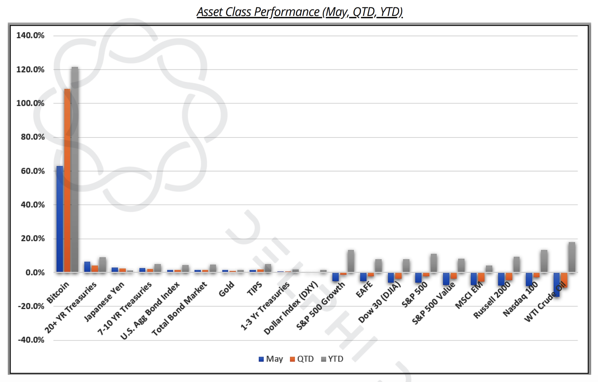
Image result for Bitcoin̢۪s Meteoric Rise is Literally off the Chart

Monday, June 3, 2019

Bitcoin Bulls Are Already Seizing on Next Year's Drop in Supply

Bitcoin bulls are already touting the next great “halvening” as a catalyst for more price gains by the biggest cryptocurrency.
That’s an event, also called halving in the crypto community, that occurs every few years when the number of coins awarded to the so-called miners that use computers to process transactions are slashed in half to prevent inflation from eroding the value of the digital asset. The next cut is expected to come in May 2020.
In a recent Twitter poll -- which, admittedly, are about as unscientific as you can get -- 61% of some 2,500 respondents said they anticipate Bitcoin will rally into the reduction of the block rewards and thereafter because of the basic rules of supply and demand. Enthusiasts hoping to continue to ride the wave of demand that has prompted Bitcoin to more than double this year point to the rallies that followed similar events in 2012 and 2016.
Bitcoin surged to around $1,000 from about $10 in the 12 months following the first halvening in November 2012, less than four years after the creation of the digital coin. The second time, Bitcoin almost tripled in the year leading up, and surged in the aftermath of the July 2016 reduction, peaking at nearly $20,000 at the end of 2017, before crashing in the months that followed.
Crypto evangelists such as Morgan Creek Digital co-founder Anthony Pompliano have been emphasizing the halvening heavily lately even through it isn’t going to happen until next year. Pompliano in a Tweet this week wrote, “Imagine if daily printing of U.S. dollars was suddenly cut in half forever. Bankers would be FOMOing even though USD isn’t a scarce asset."
Not everyone shares the enthusiasm. An increasing number of skeptics say that correlation between Bitcoin bull runs and halvenings is tenuous at best. “With a sample size of two, it’s hard to assign any statistical significance to the event," Eric Turner, director of research at Messari Inc., said in an email.
This time around, many more mainstream investors and hedge funds already own Bitcoin. The coin’s price is also swayed by the many derivatives that have appeared and are still popping up.
"Since halving events are known well in advance, it is unlikely that they would have any impact on the price of Bitcoin," Gil Luria, managing director at DA Davidson & Co., said in an email. "There are so many factors that impact the price of Bitcoin, but this should not be one of them."
The person or people who created the Bitcoin system under the pseudonym Satoshi Nakamoto capped total issuance at 21 million coins. A halvening reduces the supply of new tokens by 50%, and in theory makes existing tokens more valuable by the time the last coin is slated to be mined in 2140.
“The first halvening brought inflation from 40% to 20%. The second from 20% to 10%. The next halvening is going to reduce it from about 3.8% to 1.9%,” Kyle Samani, co-founder of crypto hedge fund Multicoin Capital Management, said in an email. “On an absolute basis, each halvening is becoming increasingly less relevant."

A collection of bitcoin tokens sit in this arranged photograph.

Employers: Be aware (or beware) of a harsh payroll tax penalty


If federal income tax and employment taxes (including Social Security) are withheld from employees’ paychecks and not handed over to the IRS, a harsh penalty can be imposed. To make matters worse, the penalty can be assessed personally against a “responsible individual.”
If a business makes payroll tax payments late, there are escalating penalties. And if an employer fails to make them, the IRS will crack down hard. With the “Trust Fund Recovery Penalty,” also known as the “100% Penalty,” the IRS can assess the entire unpaid amount against a responsible person who willfully fails to comply with the law.
Some business owners and executives facing a cash flow crunch may be tempted to dip into the payroll taxes withheld from employees. They may think, “I’ll send the money in later when it comes in from another source.” Bad idea!
No corporate protection
The corporate veil won’t shield corporate officers in these cases. Unlike some other liability protections that a corporation or limited liability company may have, business owners and executives can’t escape personal liability for payroll tax debts.
Once the IRS asserts the penalty, it can file a lien or take levy or seizure action against a responsible individual’s personal assets.
Who’s responsible?
The penalty can be assessed against a shareholder, owner, director, officer, or employee. In some cases, it can be assessed against a third party. The IRS can also go after more than one person. To be liable, an individual or party must:
  • Be responsible for collecting, accounting for, and paying over withheld federal taxes, and
  • Willfully fail to pay over those taxes. That means intentionally, deliberately, voluntarily and knowingly disregarding the requirements of the law.
The easiest way out of a delinquent payroll tax mess is to avoid getting into one in the first place. If you’re involved in a small or medium-size business, make sure the federal taxes that have been withheld from employees’ paychecks are paid over to the government on time. Don’t ever allow “borrowing” from withheld amounts.
Consider hiring an outside service to handle payroll duties. A good payroll service provider relieves you of the burden of paying employees, making the deductions, taking care of the tax payments and handling recordkeeping. Contact us for more information.